


How to get your cat to look at the camera (so you can nail your Pawsies entry!)
Mark Vette is a world-renowned Animal Behaviourist, Zoologist and Trainer. He brings together a unique combination of academic studies with 40 years of applied clinical animal behaviour consulting and treatment. Mark is a member of the International Association of Animal Behaviour Consultants. This article was written by Mark and the views expressed are his own.
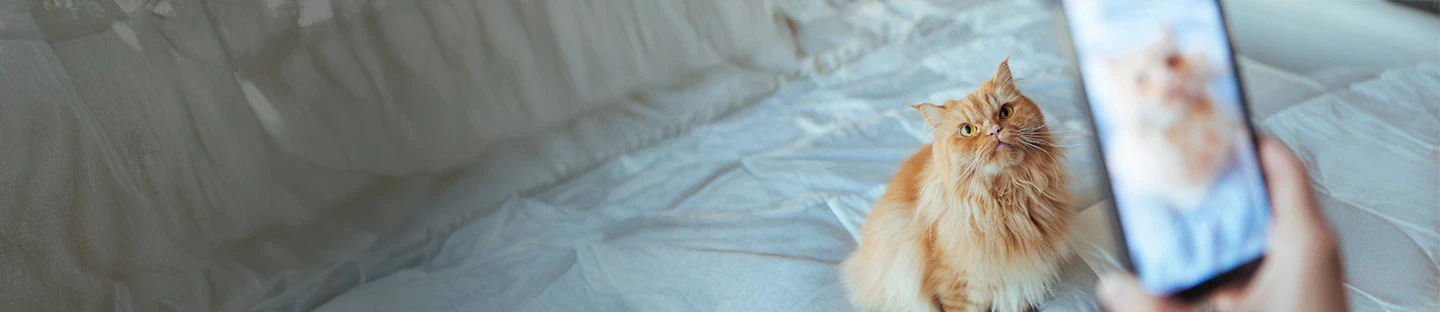
Cats are beautiful, expressive creatures — but anyone who has ever pointed a phone at one is reminded of the old adage…”dogs have owners, cats have staff” and so knows they’re also the ultimate masters of doing exactly what they want, when they want. That’s part of their charm of course…and part of why capturing the perfect photo can be such a challenge!
The Southern Cross Pawsies Awards celebrate the character, personality and quirks that make our cats so special.
1. Capture naturally occurring “focus moments”
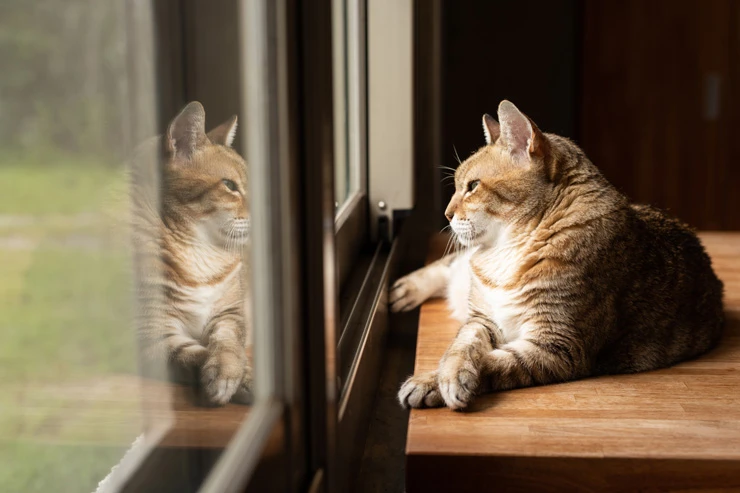
Some cats won't follow cues but will freeze and look at something interesting on their own.
Great natural gaze triggers:
- A bird outside
- A shadow
- A reflection or laser pointer
- A subtle jingling sound
- A toy dangled toward their attention line
Position the camera between your cat and the thing they're interested in. This works especially well for low-food-drive or highly independent cats.
2. Use a favourite person
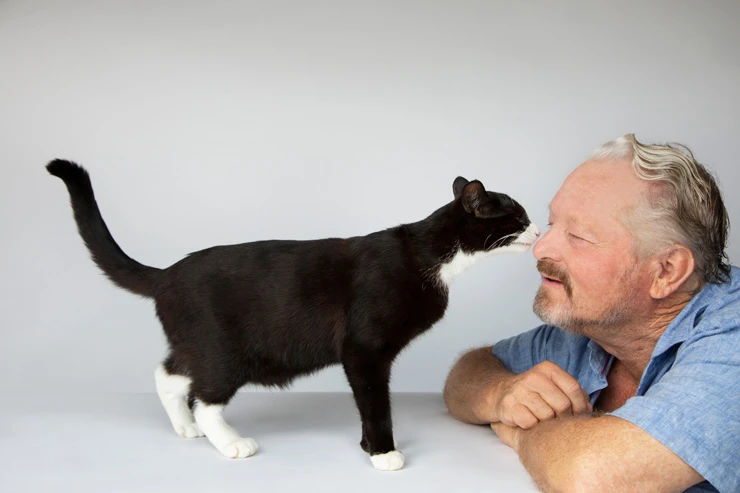
Some cats will stare lovingly (or intensely!) at their favourite human.
Set up the camera so that:
- Your cat is looking at the person
- The person is standing behind or just above your phone
This creates the illusion of direct camera eye contact without any training tools.
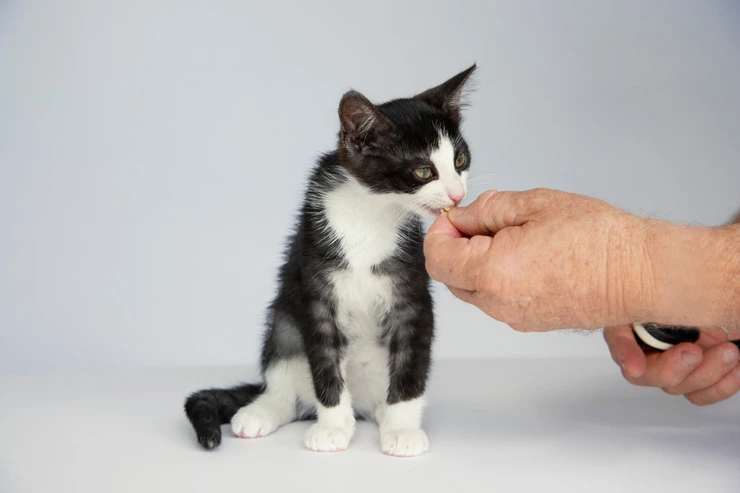
3. Pair the camera position with something good
This is classical conditioning — and for some cats, one of the easiest methods.
Steps:
- Hold the phone near your face → give treat
- Repeat in short bursts: phone appears → treat
- Reinforce only when they look toward the camera
Over time, the camera predicts “good things,” so your cat naturally orients toward it.
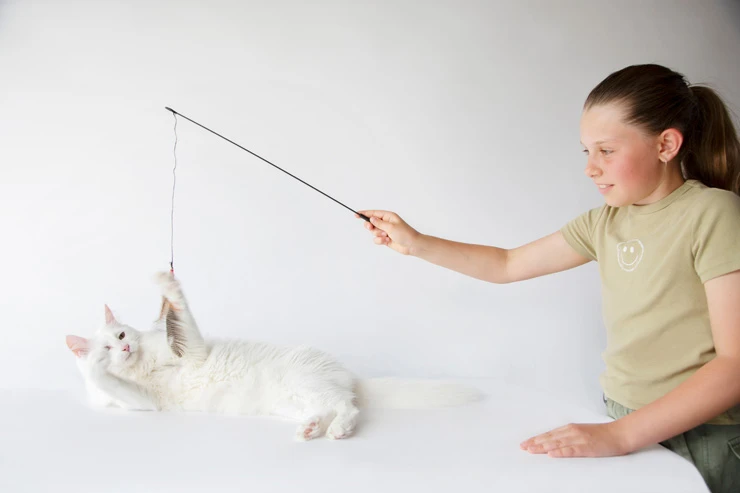
4. Use a visual lure — movement triggers gaze
Cats are hardwired to orient toward moving objects.
How to use it:
- Wiggle a feather toy behind the camera (not in front)
- Move a string toy slowly across the top of your phone
- Raise and lower a treat in a smooth line just above the lens
Keep movements subtle and slow to avoid overstimulation.
5. Use sound cues (but very softly)
Tiny, interesting sounds can trigger a natural “orienting response.”
Examples:
- Soft tongue-click
- Gentle kissy noise
- Fingertip tap on the phone body
- Crinkle of a tiny piece of paper
Take your shot the moment they glance.
Don’t repeat sounds too often — novelty is key.
6. Teach a simple “look” cue
Cats can learn verbal cues with short, well-timed sessions.
How to train “look”:
- Hold a treat near your face
- When the cat looks toward your eyes/treat, mark and reward
- Add the cue word “look” or “watch”
- Gradually move the treat closer to the camera lens over sessions
Eventually, the cat responds to the cue alone.
7. Use a target stick
For keen cat trainers, a target stick taps into natural feline curiosity and is excellent for shaping behaviour.
How to introduce the target:
- Present the stick
- When your cat moves toward or sniffs it, mark (“yes!”/click) and treat
- Repeat until they reliably touch the stick
How to use it for camera work:
- Hold the target just behind or above the camera lens
- Mark and reward when their gaze aligns with the lens
- Gradually shorten or fade the stick out
This method works well for cats who enjoy interactive training.
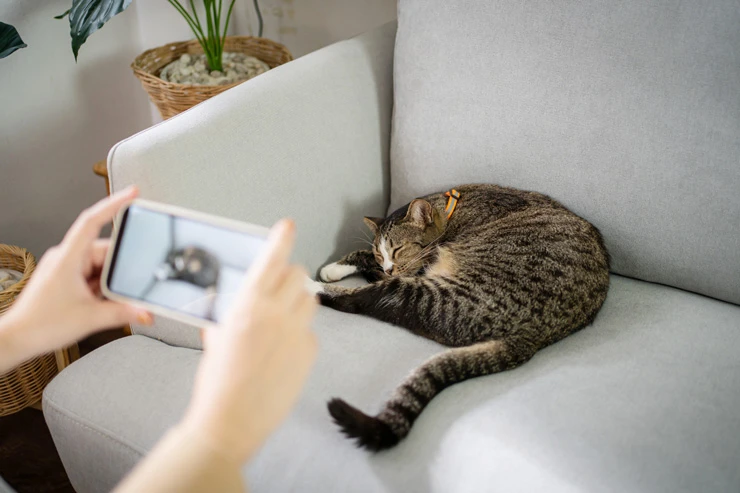
Bonus tips
- Use burst mode to take tonnes of photos, you’ll massively increase your likelihood of getting the money shot.
- You’ll get the best photos when your cat is naturally calm, social and open to interaction, so choose your moment wisely. Aim for relaxed but curious, not sleepy or in full hunting mode.
- Choose a spot your cat already loves and feels safe in, like a favourite perch, sunny spot or window ledge.
- Natural light always looks best!
- Keep sessions incredibly short (20-30 seconds), unless used to structured training sessions, cats only tolerate this type of work in small doses.
- Only dress your cat if they are genuinely comfortable wearing accessories — most aren’t. A bow tie or collar is usually more acceptable than clothing.
- Some of the best shots come from simply observing and waiting. Cats offer golden moments when we’re patient.
Remember to let their personality shine!
The Pawsies Awards aren’t about forcing a perfect portrait — they’re about celebrating character - so don’t stress if your cat won’t play ball, that’s just part of their charm.
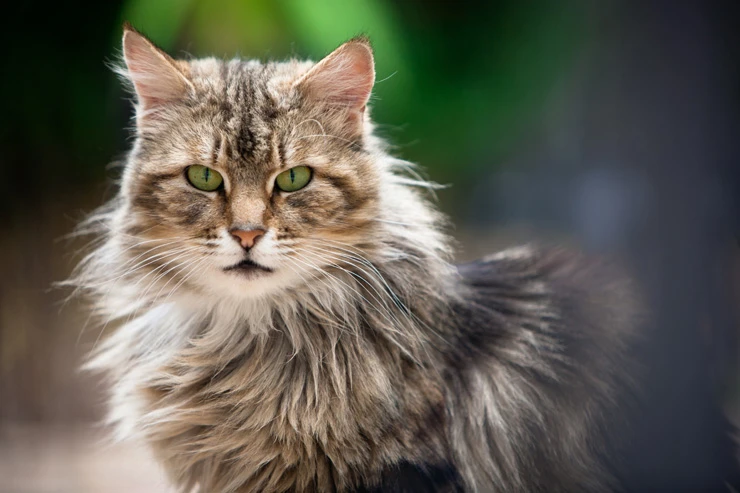
Great cat photos include:
- A regal gaze from their favourite perch
- A playful sideways glance mid-pounce
- A sun-drenched stretch
- A little loaf pose
- A shot of them squished into their tiniest box
- A snap of their mischievous ways - interrupting your work, sleeping on your head, you name it!
- A big yawn (always a crowd-pleaser!)
- The superior look on their face
Lean into who your cat naturally is. Authenticity always photographs beautifully.
Ready to capture your cat’s iconic moment?
Once you capture that perfect moment — regal, silly, mysterious or heart-melting — you’ll be ready to nominate your feline superstar for The Southern Cross Pawsies Awards.